Senior Living Chairs: A Buyer's Guide to Metal Wood Grain Seating
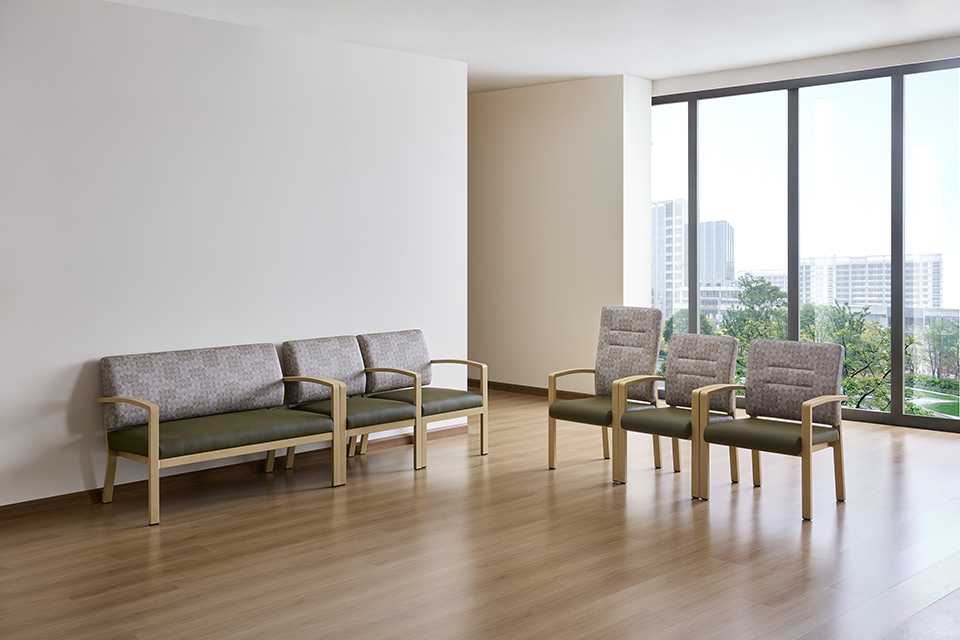
Yumeya M+ Phecda modular seating, specified for senior living common areas and resident rooms.
At Yumeya Furniture, we have specialised in metal wood grain chairs for senior living, nursing homes, care homes and healthcare settings since 1998. Over more than two decades of project supply, we have learned that a chair in these environments must do three jobs at the same time: help an older adult sit down and stand up safely, survive years of daily cleaning and repositioning by care staff, and still look like residential furniture rather than clinical equipment.
This guide shares what we have observed in real care projects. It explains how to specify senior living dining chairs, lounge chairs and healthcare seating in practice, and how metal wood grain construction compares with solid wood over a typical ten-year service life.
What Makes a Chair Suitable for Senior Living?
A senior living chair is not simply a contract dining chair with armrests. From the projects we have supplied, the chairs that perform best share a consistent set of practical characteristics:
Seat height that reduces the effort required to lower into and rise from the chair.
Armrests positioned and shaped for grip and push-off, not purely for decoration.
A defined commercial load rating that covers the actual resident population, including plus-size users.
A frame that stays stable under daily movement and cleaning, without loosening or creaking.
Surfaces that can be wiped down repeatedly without damage.
A weight that care staff can realistically move several times a day.
Metal wood grain chairs address the appearance requirement while meeting the performance ones. The wood-grain pattern is applied to a metal surface through a heat-transfer process, so the chair reads visually as wood while retaining the structural and maintenance characteristics of metal. Our second-generation Aluwood approach uses larger-diameter aluminium tubing and grain patterns that follow the natural direction of wood, giving a more authentic appearance without the drawbacks of solid timber in high-use environments.
Metal Wood Grain vs Solid Wood: What Operators Tell Us
Solid wood still provides a warm, domestic look that photographs well. In high-frequency care use, however, the operational differences become clear.
In the projects we have compared, solid wood chairs commonly develop looseness and noise within one to three years. Metal wood grain chairs with fully welded aluminium frames are designed to maintain structural integrity across a ten-year product lifecycle. Routine maintenance interventions typically drop by about half because there are no joints that need periodic tightening. The non-porous metal surface is also simpler to sanitise between meals.
This does not mean solid wood is never appropriate. When the brief prioritises tactile premium timber and the budget supports higher maintenance, it remains a valid choice. Most operators we work with ultimately decide based on intensity of use and whether they prefer to fund appearance or day-to-day availability.
Key Considerations for Care Operators
When facility managers and operators specify seating, the questions that matter most are practical rather than stylistic.
Seat height, seat depth and long-term posture
A seat that is too low forces residents to drop further and push harder to stand. In most of our senior living ranges we set seat heights between 470 mm and 490 mm for this reason. Seat depth is equally important for longer sitting periods. Too deep and shorter residents slide forward; too shallow and the chair fails to support the thighs properly. For lounges and resident rooms where people remain seated for extended periods, we recommend checking both dimensions against the actual resident profile rather than relying on a single “standard” measurement.
Armrests and transfers
Armrests should give a clear place to push against when standing and should not obstruct wheelchair transfers. Open or forward-extending armrests generally work better in dining and activity spaces.
Cleaning, weight and staff workload
Lightweight aluminium frames (many of our dining chairs weigh 8–10 kg) make it realistic for one person to reposition seating several times a day. Tilt-to-move casters on selected models allow staff to roll an empty chair by tipping it back, rather than lifting or dragging it. Surfaces finished with high-quality powder coating tolerate routine sanitising agents more readily than untreated timber, provided cleaning follows the recommended procedures.
Space configuration
Dining rooms need stackable or easily movable chairs. Lounges and family areas benefit from higher backs and more enclosed shapes. Modular systems let operators vary back height or create continuous runs without introducing entirely different chair families.
Key Considerations for Distributors and Dealers
For importers, wholesalers and project furniture suppliers, the constraints are usually inventory and flexibility.
Modular systems and stock holding
Holding a complete frame for every back style and configuration ties up capital and warehouse space. Shared frames, arms, backs and seats allow a smaller set of components to cover multiple applications. This is particularly useful when project specifications change or when offering both indoor upholstered and more open configurations from the same structure.
Customisation, upholstery and lead times
Most projects require COM upholstery or specific finish options. Selected ranges allow local upholstery teams to complete the work once the project fabric is chosen. Standard lead times are typically 30 days; lower-MOQ stock programmes are available on certain models for market testing or smaller orders.
After-sales and spare parts
Removable upholstery components and modular construction mean a damaged seat or back can often be replaced without discarding the entire chair. Frame warranties of ten years and consistent 500 lbs ratings across the range simplify the conversation with end customers.
Representative Examples from Our Range
We keep the examples brief. Full dimensions, packing quantities and finish options are available in the catalogue or on request.
Lightweight dining armchair (e.g. YW series): Designed for high-turnover dining and multipurpose rooms. Slim wood-look frame, supportive armrests, 500 lbs rating, and light enough for staff to stack and move frequently.
High-back lounge chair (YSF1020): For reception lounges, family visiting areas and quiet corners. Tall back and curved sides create a more enclosed seating space while the aluminium frame keeps the weight manageable.
Megrez patient and multiple seating: Shared armrest system that links individual chairs into continuous runs. Useful in waiting areas and consultation spaces where wipe-clean surfaces and clear circulation are priorities.
Halley / Odyssey modular platform: One frame platform accepts different back heights or arm configurations, allowing distributors to cover dining, resident rooms and lounge applications without multiplying SKUs.
In Australian aged-care projects we have supplied, operators consistently highlighted the same outcomes: armrests and seat height supporting independent standing, the wood-grain appearance warming the interior, and the non-porous surface simplifying cleaning after meals.
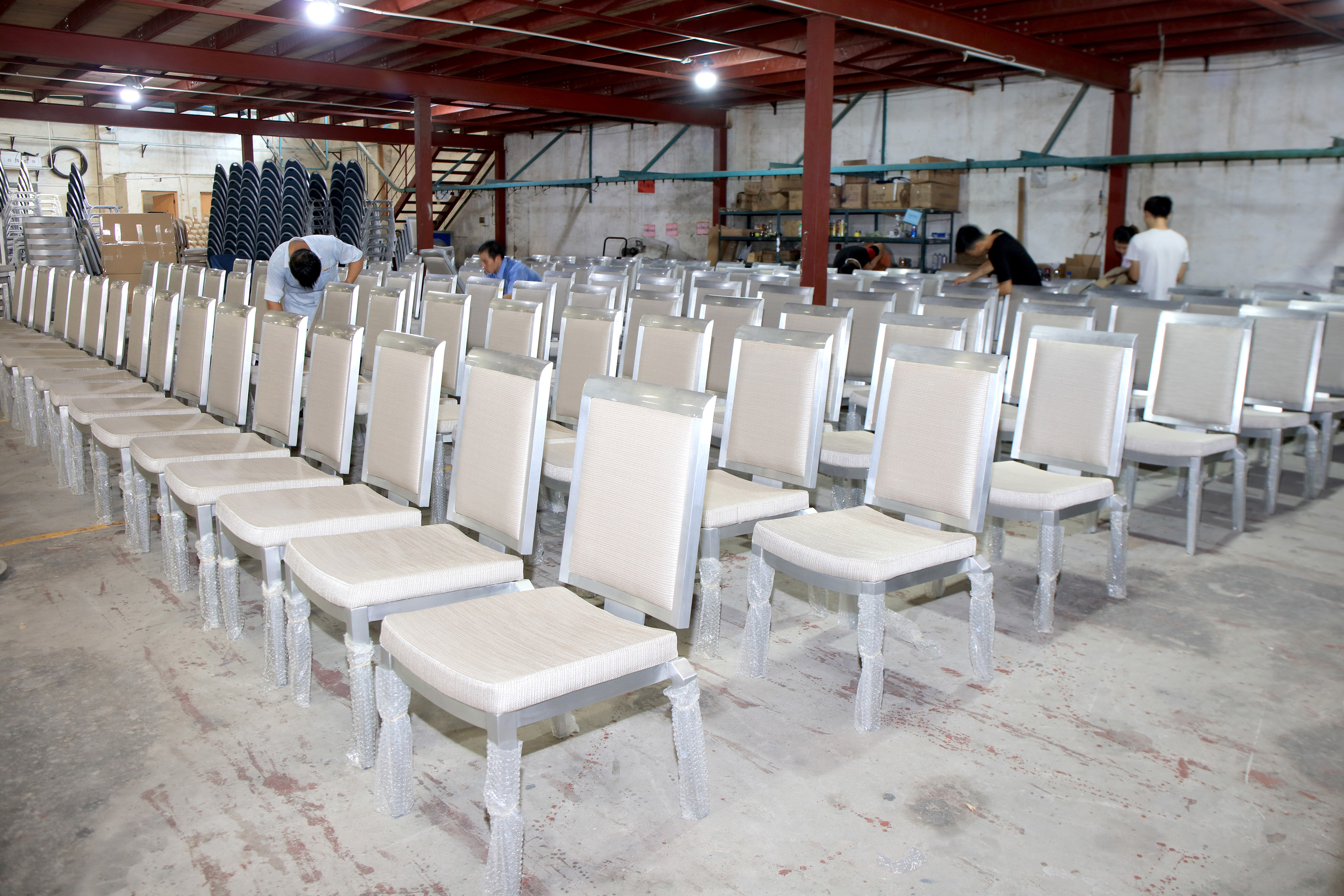
Quality checks at Yumeya cover raw materials, work in pro
How to Specify Senior Living Chairs: Practical Steps
Map the spaces first (dining, lounge, resident rooms, waiting areas, outdoor terraces). Each has different sitting duration and cleaning regimes.
Fix seat height and check seat depth against the resident population.
Verify armrest geometry for grip and wheelchair transfers.
Match load rating to the actual user profile and get it in writing.
Decide movement method: fixed glides, tilt-to-move casters, or adjustable legs.
Confirm which cleaning agents and concentrations the finish tolerates.
Request model-specific test reports (not a generic certificate).
Agree finishes, upholstery, packing and spare-part availability.
Sample in the actual room, on the actual floor, with the people who will use the chairs.
Lock commercial terms: MOQ, lead time, warranty and after-sales support.
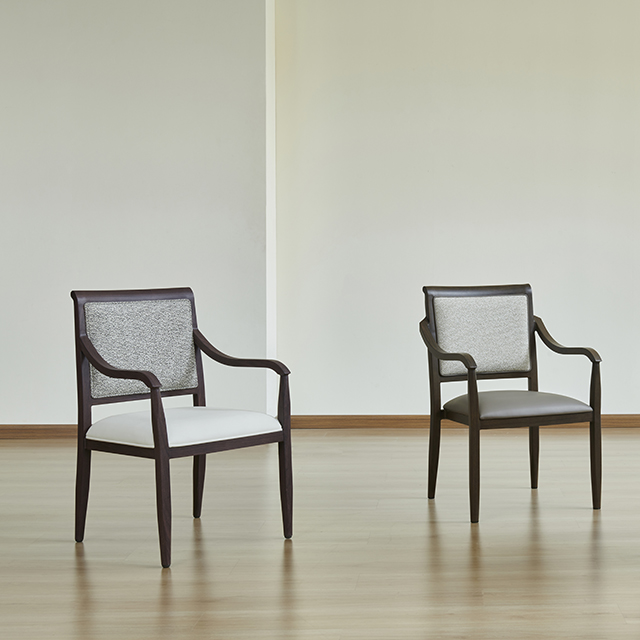
YW5532-S senior living dining armchair: 480 mm seat height, 9.5 kg, 500 lbs rating.
Frequently Asked Questions
What seat height and seat depth work best for older adults?
In most senior living projects we recommend 470–490 mm seat height. Seat depth should be checked against the specific resident group; longer sitting areas usually need a depth that supports the thighs without causing sliding. Always verify both dimensions on site with the actual users.
How do metal wood grain chairs compare with solid wood on total cost of ownership?
Purchase price is often lower on comparable models. The larger difference appears in maintenance: fewer interventions, no periodic tightening of joints, and structures designed for a ten-year lifecycle versus solid wood that commonly loosens within one to three years of high-frequency use.
Can modular seating reduce our inventory holding?
Yes. Shared frames and components across back heights, arm styles and seating runs allow distributors to cover more applications with fewer SKUs, which is particularly helpful when project requirements change.
What cleaning and maintenance should we plan for?
The powder-coated metal surface is non-porous and tolerates routine sanitising. Follow the care instructions for concentration and products. Removable upholstery components make seat or back replacement possible without discarding the frame.
Are samples and lower-MOQ orders available?
Yes. Certain models are available under a 0 MOQ stock programme for testing, subject to availability. We recommend placing samples in the actual environment before locking a full specification.
What compliance documentation do you provide?
We hold third-party SGS reports on specific models covering relevant strength and durability clauses (including EN and ANSI/BIFMA standards). Reports are model- and clause-specific; we supply the documentation that matches the exact chair being specified. The factory also passed the Disney ILS Social Compliance Audit in 2023.
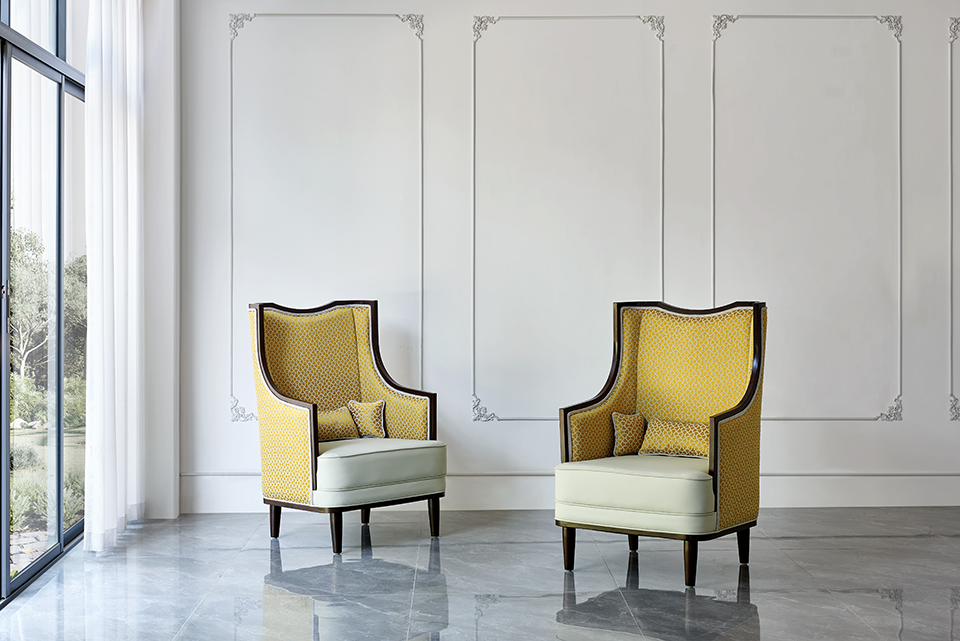
YSF1020 high-back lounge chair: 21 kg aluminium frame with a 500 lbs rating.
Conclusion
Senior living chairs are judged twice: once when the order is signed, and again years later when the dining room is still in daily use, nothing creaks, and residents can still stand independently. Metal wood grain construction offers a practical route to that second review—residential appearance without the maintenance burden that solid timber often brings into commercial care environments.
Our Elder Ease approach centres on supportive armrests, considered seat heights, floor-appropriate glides or casters, modular components for dealers, and a consistent 500 lbs rating with a 10-year frame warranty.
Whether you are fitting out a care home, renewing a dining room, or building a senior living range for distribution, we can provide a catalogue, finish options, specification sheets and samples.
Email:info@youmeiya.net
Tel / WhatsApp: +86 152-1969-3331
Web:yumeyafurniture.com
Contact: Sea Fung
Address: Zhennan Industry, Heshan City, Guangdong Province, China